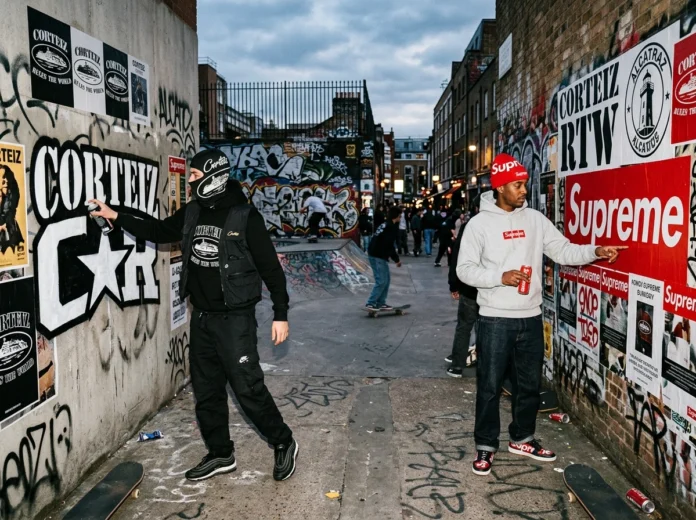
Streetwear has grown from a niche skate-and-hip-hop scene into a global fashion force worth billions. Two names dominate the conversation right now: Supreme, the New York institution that helped define the culture, and Corteiz, the London upstart that flipped the rulebook and built a cult following in record time.
Both brands sell scarcity, community, and identity. But they go about it in very different ways. So which one actually wins? Let’s break down the origins, hype, pricing, and culture behind each brand to find out.
Where It All Started
Supreme: The Downtown Legen
Supreme opened its first store on Lafayette Street in New York City in 1994. Founder James Jebbia built the shop around skateboarding, and the layout was designed so skaters could roll right through with their boards. That authenticity mattered. Early Supreme wasn’t chasing trends—it was made by and for the people who lived the culture.
Over three decades, Supreme became a blue-chip name. Its box logo tee is one of the most recognized garments in fashion. In 2020, VF Corporation acquired Supreme for roughly $2.1 billion, a deal that cemented its status as a mainstream powerhouse.
Corteiz: The Rule Breaker
Corteiz, founded by Clint419 in London around 2017, took a completely different path. The brand grew almost entirely through word of mouth and social media. For a long time, its Instagram account was private, and you needed a password just to shop the site. That deliberate exclusivity turned Corteiz into one of the most talked-about brands in the world.
Its Alcatraz logo and the slogan “Rules The World” (RTW) became instant symbols of rebellion. While Supreme grew up alongside corporate fashion, Corteiz positioned itself as the anti-establishment alternative—and younger buyers loved it.
Brand Identity and Message
Supreme sells a legacy. Its red box logo represents decades of collaborations, art references, and skate roots. When you wear Supreme, you’re buying into history.
Corteiz sells a movement. Clint419 has built the brand on authenticity, community, and a refusal to play by industry norms. The messaging feels personal and raw, which resonates strongly with Gen Z shoppers who value realness over polish.
For an American audience raised on hip-hop and skate culture, both stories land—but they attract slightly different crowds. Supreme appeals to collectors and longtime heads. Corteiz pulls in the newer generation hungry for something fresh.
Cultural Impact
Supreme’s influence on fashion is hard to overstate. It practically invented the modern hype-drop model, where limited items release on a set date and sell out in minutes. Countless brands copied that playbook. Supreme also elevated collaborations into an art form, partnering with everyone from Nike to Louis Vuitton.
Corteiz, though younger, has made a massive cultural splash. Its guerrilla marketing stunts are the stuff of legend. The brand once sold jackets for 99 pence to anyone willing to trade in a designer coat, then donated the traded pieces to charity. It shut down streets in London, Paris, and New York with surprise pop-ups that drew thousands. These moments generated headlines and loyalty money can’t easily buy.
In the U.S., Corteiz has spread fast through social platforms and co-signs from major artists, proving that a homegrown London brand can cross the Atlantic and win real cultural ground.
Exclusivity and the Hype Machine
Scarcity is the engine behind both brands.
- Supreme releases weekly drops during each season. Items sell out almost instantly, and resale prices often multiply the retail cost.
- Corteiz takes exclusivity even further. Password-protected sales, secret locations, and unannounced drops make getting product feel like winning a prize.
Corteiz arguably out-hypes Supreme when it comes to raw demand-to-supply ratio. Because the brand keeps quantities low and access tight, its pieces can feel even harder to grab than Supreme’s. That said, Supreme’s sheer catalog depth and history give it staying power that a newer brand still has to prove over time.
Pricing Breakdown
Price is where regional buyers pay close attention, and the two brands sit in similar territory.
Supreme Pricing
- Box logo tees: roughly $40–$60 retail, but resale can hit hundreds.
- Hoodies: around $150–$180.
- Collaboration pieces and accessories vary widely, sometimes reaching thousands on resale.
Corteiz Pricing
- Tees: roughly $40–$70.
- Cargos and hoodies: around $100–$170.
- Outerwear and special releases climb higher, with resale premiums to match.
Both brands offer entry-level items that let newcomers buy in without breaking the bank, while their limited drops fuel a hot resale market. For value hunters, the real cost often depends on whether you buy at retail or pay the resale markup.
Celebrity Endorsements
Supreme’s celebrity ties run deep. Everyone from Kanye West to Nas to Kate Moss has appeared in campaigns or worn the brand. Its collaborations with musicians and artists keep it woven into pop culture.
Corteiz has earned organic co-signs from a new wave of stars. Central Cee, Stormzy, and other major artists have worn the brand, and its reach keeps expanding among American rappers and athletes. What makes Corteiz endorsements powerful is that they often feel genuine rather than paid, which strengthens the brand’s credibility with skeptical young shoppers.
Community and Loyalty
This may be the most important category of all.
Supreme built a devoted global community over 30 years. Its fans camp outside stores, trade pieces, and treat drops like events. That loyalty is deep and proven.
Corteiz, however, has created something that feels more like a family. Clint419 speaks directly to fans, involves them in stunts, and rewards them for participation. The brand’s community-first approach makes buyers feel like insiders in a growing movement rather than customers of a corporation. In an era where authenticity drives purchases, that connection is gold.
Head-to-Head Summary
|
Category |
Supreme |
Corteiz |
|---|---|---|
|
Founded |
1994, New York |
~2017, London |
|
Identity |
Legacy and heritage |
Rebellion and community |
|
Exclusivity |
Weekly drops |
Password-locked, surprise drops |
|
Pricing |
Comparable, high resale |
Comparable, high resale |
|
Cultural buzz |
Established icon |
Fast-rising disruptor |
|
Community |
Loyal and global |
Passionate and personal |
So, Which Streetwear Giant Wins?
The honest answer depends on what you value.
If you want proven heritage, deep collaborations, and a brand that literally shaped modern streetwear, Supreme still holds the crown. It has the history, the recognition, and the catalog no newcomer can instantly replicate.
But if you want energy, authenticity, and a brand that feels like it belongs to the people, Corteiz is winning the culture war right now. Its raw marketing, tight community, and rebellious spirit have made it the most exciting name in streetwear today—especially among younger American buyers looking for the next big thing.
Supreme is the established champion. Corteiz is the challenger landing serious punches. And based on current momentum, Corteiz has the edge where it matters most: cultural relevance and community passion.
The smart move? Watch both closely. In streetwear, today’s underdog can become tomorrow’s icon—and right now, Corteiz looks ready to rule the world.