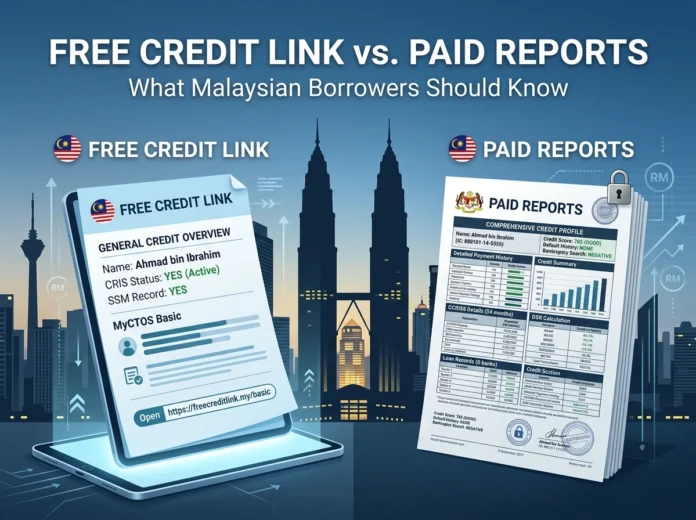
Before you apply for a home loan, car financing, or a new credit card, it helps to know exactly how lenders see you. Your credit information shapes whether you get approved and what terms you receive. In Malaysia, you can access this information in a few ways, and the choice often comes down to a free credit link versus a paid report. Understanding the difference helps you check your standing without paying for things you may not need.
This guide breaks down what each option offers, the kind of information you can expect, and the situations where one makes more sense than the other. By the end, you’ll have a clearer view of how to monitor and manage your credit confidently.
Why Your Credit Information Matters in Malaysia
Lenders in Malaysia rely on credit data to assess risk. When you apply for financing, banks typically review your repayment history, outstanding debts, and how you’ve handled past credit. This information comes from sources such as the Central Credit Reference Information System (CCRIS), managed by Bank Negara Malaysia, and from private credit reporting agencies.
A strong credit profile can improve your chances of approval and may help you secure better interest rates. A weaker profile can lead to rejection or higher costs. Checking your own information before applying gives you the chance to spot errors, settle outstanding amounts, and present yourself in the best possible light.
What this means: Reviewing your credit data is not just for people with problems. It’s a smart habit for anyone planning to borrow.
What a Free Credit Link Typically Offers
A free credit link is a no-cost way to view a snapshot of your credit standing. Many platforms and services now offer this entry point so borrowers can get a general sense of where they stand without commitment.
Common features of free access
Free options usually give you a basic overview. You might see a summary score, a general indication of your credit health, or a simplified breakdown of your active accounts. Some tools also offer alerts or reminders that help you stay aware of changes over time.
For a starting point, you can explore a free credit link to see what kind of summary information is available before deciding whether you need anything more detailed.
The strengths of going free
The biggest advantage is cost. You pay nothing to get a general read on your situation. Free tools are also fast and convenient, often delivering results within minutes. For routine check-ins or early planning, this is frequently enough.
The limits to keep in mind
Free does come with trade-offs. The information may be less detailed than a full report. You might receive a summary rather than a line-by-line account history. Some free services also update less frequently, so the data may not reflect very recent activity. It’s wise to confirm what a specific free service actually shows before relying on it.
What this means: A free credit link is excellent for quick, regular awareness, but it may not capture every detail a lender will see.
What Paid Credit Reports Provide
A paid credit report is a more comprehensive document. You pay a fee, and in return you typically get a deeper, more structured view of your credit history.
The depth you can expect
Paid reports often include a detailed account of your borrowing history, such as the status of each loan or credit facility, your repayment patterns over time, and outstanding balances. Many also include information on applications you’ve made and how your accounts have performed month to month. This level of detail helps you understand the full picture rather than a simplified summary.
When the extra detail adds value
If you’re preparing for a major financial decision, the depth of a paid report can be reassuring. A detailed history lets you verify each entry, identify discrepancies, and address issues before a lender does. For high-stakes applications, this thoroughness can be worth the cost.
The cost consideration
The obvious drawback is the fee. Costs vary depending on the provider and the type of report you choose. If you only need a general sense of your standing, paying for a full report may be more than necessary. The value depends on how detailed your needs are.
What this means: Paid reports trade a small cost for greater detail and confidence, which can matter most when the stakes are high.
Comparing the Two Side by Side
Choosing between the two becomes easier when you weigh them against your goals.
Coverage and detail
A free credit link tends to offer a summary view. A paid report offers a fuller, more granular account. If you simply want to know whether you’re on track, the free version often answers the question. If you need to examine specifics, the paid report wins.
Frequency of checking
For ongoing monitoring, free options are practical because they cost nothing to revisit. Paying for a report each month would add up quickly. Many borrowers use a free tool for regular check-ins and reserve paid reports for important moments.
Accuracy and recency
Both free and paid sources draw from credit data, but update schedules can differ. Always check how current the information is, regardless of which option you choose. Recent activity, such as a newly settled debt, may take time to appear.
What this means: The two options are not rivals so much as tools for different jobs. Many borrowers benefit from using both at the right times.
When a Free Option Is Usually Enough
A free credit link suits everyday awareness. Use it when you want a quick health check, when you’re early in your planning, or when you simply want to track changes over time. It’s also a sensible first step if you’re unsure whether you even need a detailed report yet.
If your free check reveals no surprises and your plans are still some months away, you may not need to pay for anything more right now.
When a Paid Report May Be Worth It
Consider a paid report when you’re close to a significant application, such as a mortgage or a large loan. The detailed view helps you confirm that every entry is accurate and lets you resolve any issues in advance. It’s also useful if a free summary raised concerns you want to investigate, or if you’ve recently disputed information and want to verify the outcome in detail.
In short, pay for depth when the decision is large and the details matter.
Conclusion
Both a free credit link and a paid credit report have a place in a Malaysian borrower’s toolkit. The free option gives you fast, low-cost awareness that’s ideal for routine monitoring and early planning. The paid report delivers the depth and verification that come in handy before major financial commitments.
The smartest approach is often a blend. Use free access to stay informed throughout the year, then invest in a detailed report when you’re preparing for something important. Either way, checking your credit before you borrow puts you in a stronger position.
Key takeaways: Start with a free check to understand your standing, confirm how recent the data is, and turn to a paid report when you need a complete, verified history. Knowing your credit before lenders do is one of the simplest ways to borrow with confidence.

